
Oxford City Directory Collections
The confirmed Oxford collection landscape is valuable precisely because its limits are known. Smith Library of Regional History holds directories, maps, newspapers, photographs, books, and yearbooks for Butler County and Southwest Ohio. Its public descriptions do not publish an exhaustive Oxford city-directory title, publisher, or year run. That means a claim that Oxford has a continuous series, a particular publisher, or a specific reverse volume would be unverified. Give the library a name, street, and approximate year, then ask staff what title and edition they can actually retrieve.
| Collection or source | Verified dates | Where held | Access and limit |
|---|---|---|---|
| Smith Library directories, yearbooks, maps, and newspapers | Exact Oxford run not published | Oxford Lane Library | In person or appointment; ask for Oxford, township, county, reverse, and yearbook material. |
| BCHS Hamilton and Middletown directories | 1858-2017, incomplete | Butler County Historical Society | Holdings consultation; this is not evidence of a continuous Oxford run. |
| BCHS county and rural directories | Years not published | Butler County Historical Society | Request a focused collection check for Oxford or nearby rural context. |
| Miami digital Oxford and Butler County materials | Item-level dates vary | Miami University Digital Collections | Online collection search; objects are not a verified city-directory run. |
| Miami Recensio annuals | 1869-1871; 1905-2015, with stated gaps | Miami Digital Collections | Online annual collection; documents student history, not by itself city residence. |
| Federal census | Through 1950 released | National Archives and genealogy repositories | Decennial household snapshot, paired with local materials. |
Lane Board minutes record restricted funding for city-directory digitization for Hamilton, Fairfield, and Oxford in 2024. That funding is promising, but it is not proof that an Oxford volume is already online. The safest search phrase is a request for a named collection and time period, not an assumed digitized series.
Oxford Directory Shelf Access
Smith Library of Regional History is the local starting point for a non-digital Oxford directory question. It is on the second floor of Oxford Lane Library, 441 S. Locust St., Oxford, OH 45056, and its contact number is 513-523-3035. Posted hours are Monday 10 a.m. to noon and 1 to 8 p.m., Tuesday through Friday 10 a.m. to noon and 1 to 5 p.m., Saturday by appointment, and closed Sunday. Bring the narrowest possible request: name variants, a street or rural description, approximate years, and the kind of material sought.
The Smith Library location and hours page shows the local repository used for this work.
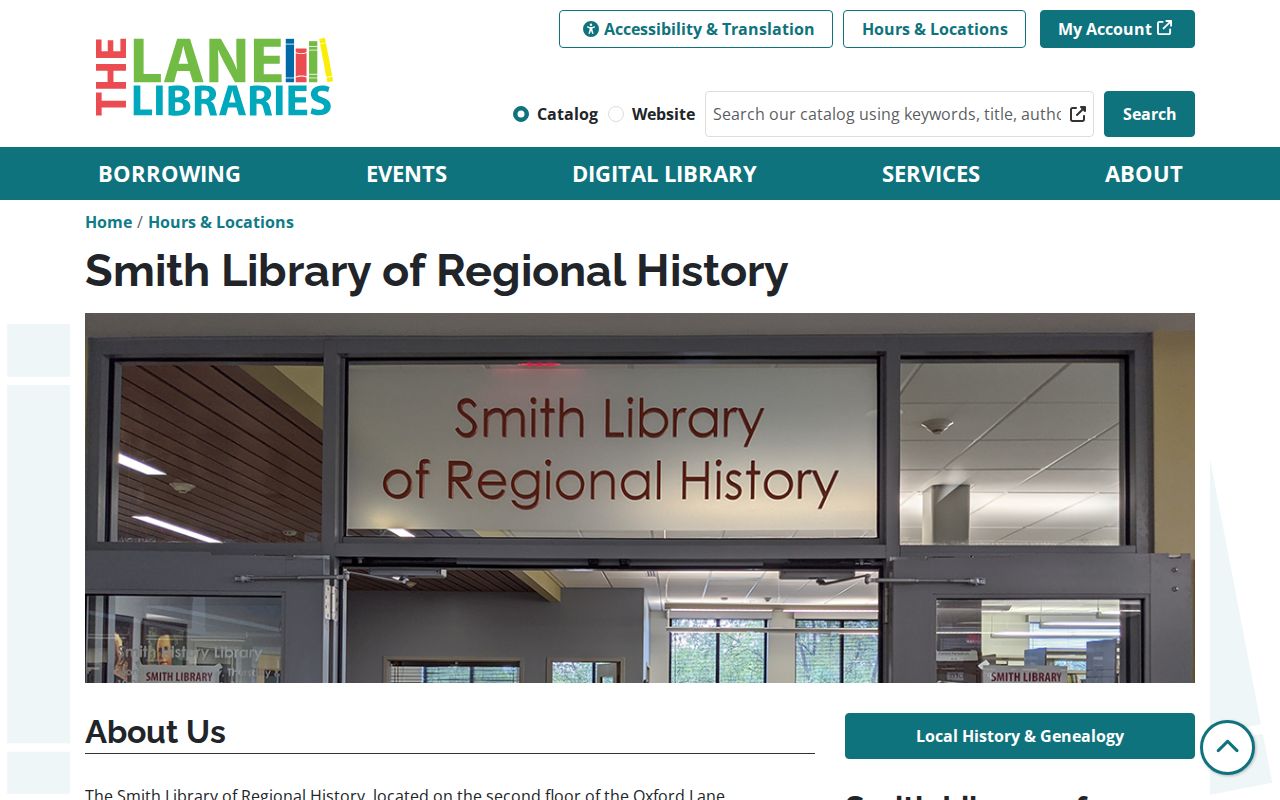
Its holdings description supports a shelf, microfilm, map, scrapbook, newspaper, or archive-file request. It does not support a statement that every Oxford surname or every year is indexed online.
Lane’s Local History & Genealogy service also has a specific Property History request type, alongside obituary/newspaper, genealogy, local history, photograph, and military requests. The service page does not publish a research fee, response time, or an itemized Oxford directory run. Ask for the physical item or collection first, then ask what access route applies.
The Lane Local History & Genealogy page is the source for those research-request categories.
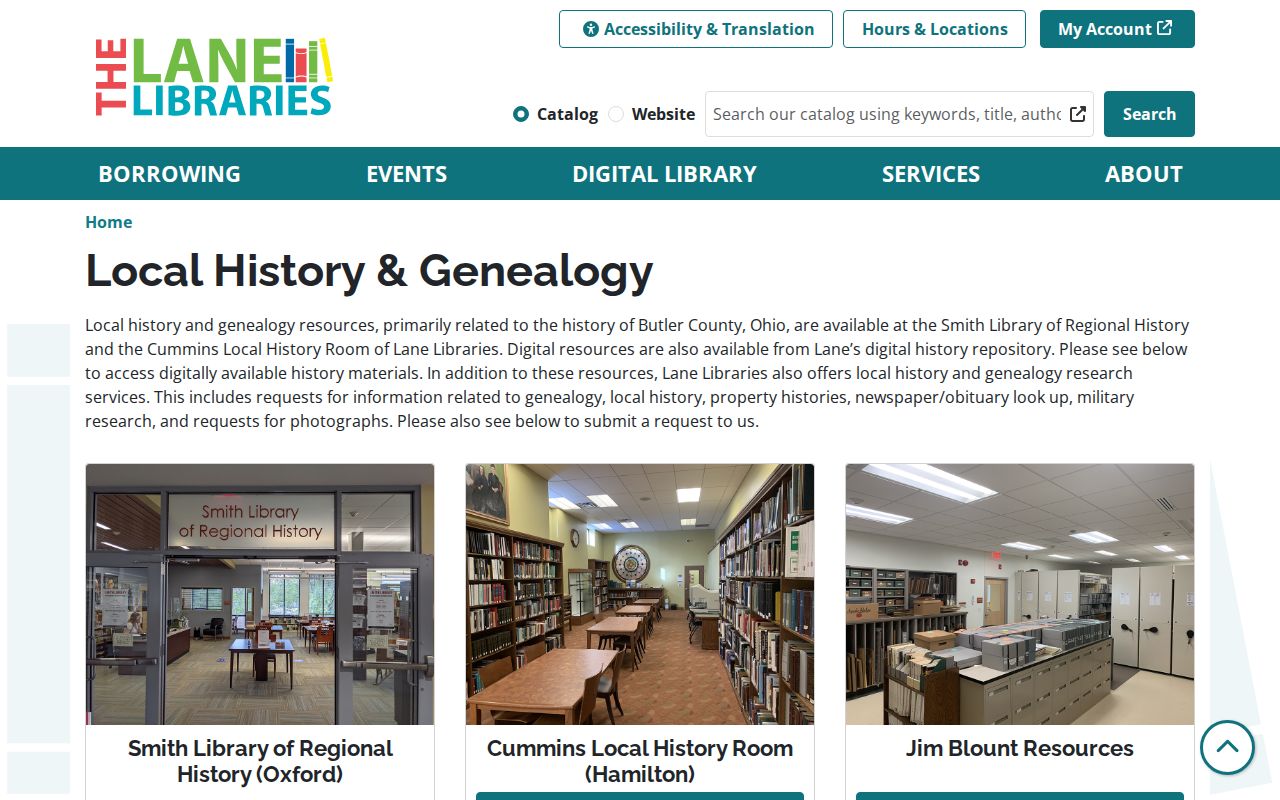
A focused address-and-year request is more likely to yield a usable directory or map lead than a broad request for all records about a family.
Oxford Directory Digitization Check
No official online digitized Oxford directory volume was verified in the research. That absence should remain visible. A library collection description, a funding record, or a digitized item about Oxford is not the same as a browse-ready directory. Before citing a volume, confirm the title, date, publisher if stated, repository, and whether it can be viewed online, consulted on site, or requested from staff.
Miami’s digital collections provide thousands of searchable photographs, newspapers, manuscripts, video, university publications, oral histories, and Oxford or Butler County materials. Search results are collection leads, not substitute directory entries. They can help resolve a name spelling, local institution, or date, then point the researcher back to the library shelf or archive description.
The Miami Recensio collection is one documented online annual source.
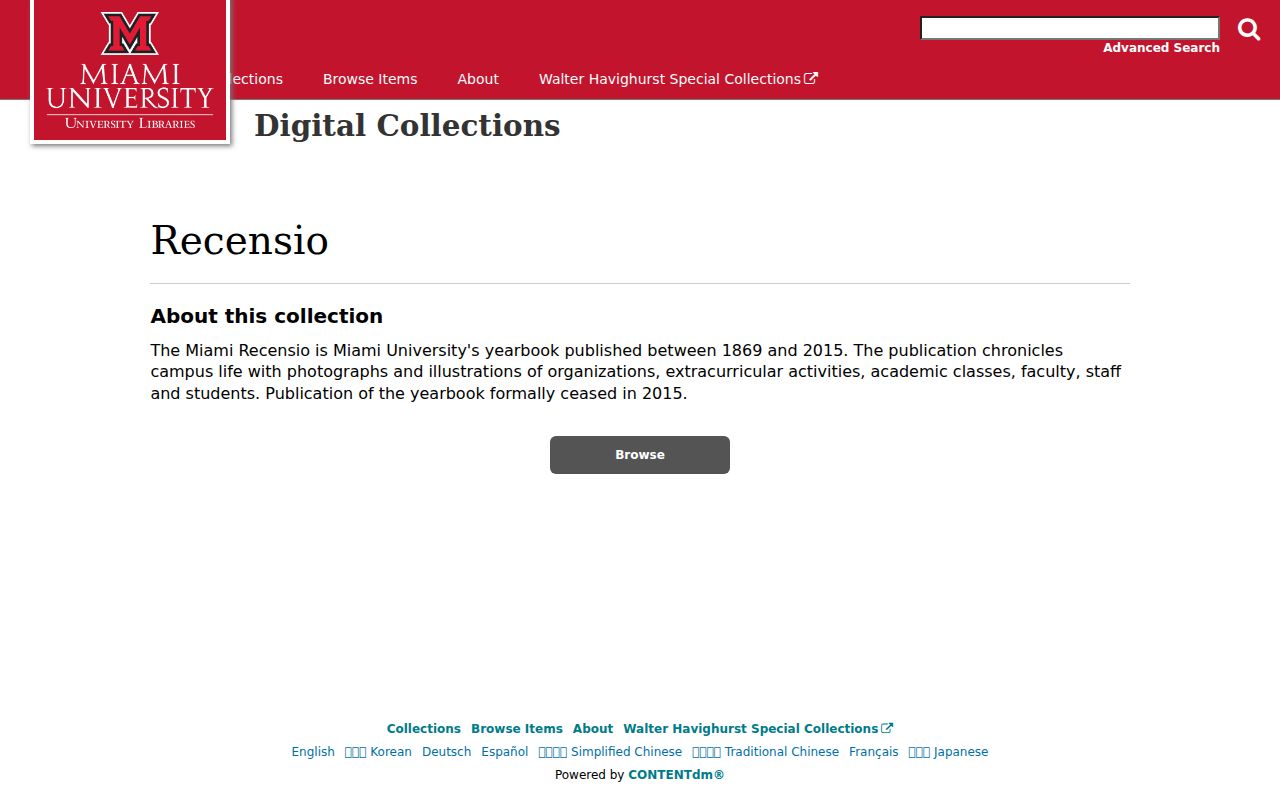
Recensio spans 1869 to 1871 and 1905 to 2015, with breaks from 1872 to 1892 and 1895 to 1904. It is a clear student-history timeline, but an annual entry alone does not establish that someone lived in Oxford beyond the context it explicitly supplies.
Reading an Oxford Directory Entry
No digitized Oxford directory page was verified, so no actual Oxford entry was copied or generalized here. When a library or archive provides a real volume, capture only what that edition visibly prints and photograph or note its abbreviation key before interpreting a line. An entry may give a surname, given name or initials, spouse or widow notation, a street address, a telephone, an activity line, and a symbol or abbreviated mark. The research did not verify that every Oxford edition contains every one of those fields.
| Name as printed | Surname, given name, or initials. Keep the exact spelling for later newspaper and archive searches. |
|---|---|
| Family reference | Spouse or widow notation when the specific edition prints one; it is a lead, not an identity conclusion. |
| Address | The printed street number and street wording, checked against the edition year and later map or deed context. |
| Activity line | An abbreviated descriptive line, if shown. Interpret it only with the volume’s own key. |
| Telephone or mark | Record it only when visible and preserve the publisher’s explanation of any symbol. |
Note: An address or initials match is a research lead, not proof that two similarly named people are the same person.
Oxford Directory Reading Terms
Directory formats vary by publisher and era. The terms below describe common research structures without claiming that an unverified Oxford edition includes them. Use the actual volume’s title page, introduction, and key as the authority for its notation.
- Criss-cross directory
- An address-ordered arrangement that may turn a street and number into a historical name lead. Its existence must be confirmed for the title and year in hand.
- Householder index
- An index organized around the named person or household reference rather than street order. It is useful for finding a first entry before checking an address.
- Abbreviation key
- The publisher’s explanation of shortened words and symbols. Read it before assigning meaning to a notation.
- Collection description
- An archive or catalog record that identifies a repository, dates, scope, and access conditions. It may describe material that is not digitized.
Miami’s ArchivesSpace catalog supports free-text search, record-type and search-field limits, year ranges, and added rows. Check a result for repository, collection or series title, dates, scope and content, restrictions, and container or location. Those fields identify what to request, not an automatic online page image.
Oxford Directories and Family Trails
A historical directory is strongest when it is treated as one dated observation in a longer trail. Move through editions in both directions, writing down the exact address, name form, and any relationship notation. The federal census, released after 72 years, is available through 1950 as of this research date and gives a decennial household snapshot. Deeds, probate files, newspapers, cemetery records, and archive material can then test whether the same person or address appears across independent sources.
- Ask Smith Library or another repository for the first confirmed title and year that may contain the surname or address.
- Transcribe the entry exactly and keep the title, edition year, page, and abbreviation key with the notes.
- Check the prior and next available directory year for the same spelling, alternate initials, or a revised street address.
- If a confirmed criss-cross volume exists, search the address order to create a dated lead, then retain the volume citation.
- Pair the local sequence with the closest released census and a deed, probate, newspaper, cemetery, or archive record that fits the same time frame.
Oxford’s record history makes vocabulary important. A historic land record may use Oxford Township, rural Butler County, or City of Oxford language, even when the parcel trail continues. Search initial variants and business or organization names too, particularly in the original Mile Square and Uptown material where historic records reflect many naming styles.
Oxford Directory County Sources
Butler County Historical Society is the regional companion to the Oxford shelf. It is an appointment-based archive at 327 N. Second St., Hamilton, with 513-896-9930 and info@bchistoricalsociety.com. Its family files include material on more than 5,000 Butler County names, including genealogy, Bibles, photographs, letters, diaries, documents, and donated items. The collection also includes directories, newspapers, school and reunion material, churches, businesses, settlements, and regional reference files.
The Butler County Historical Society collection highlights page documents this wider historical route.
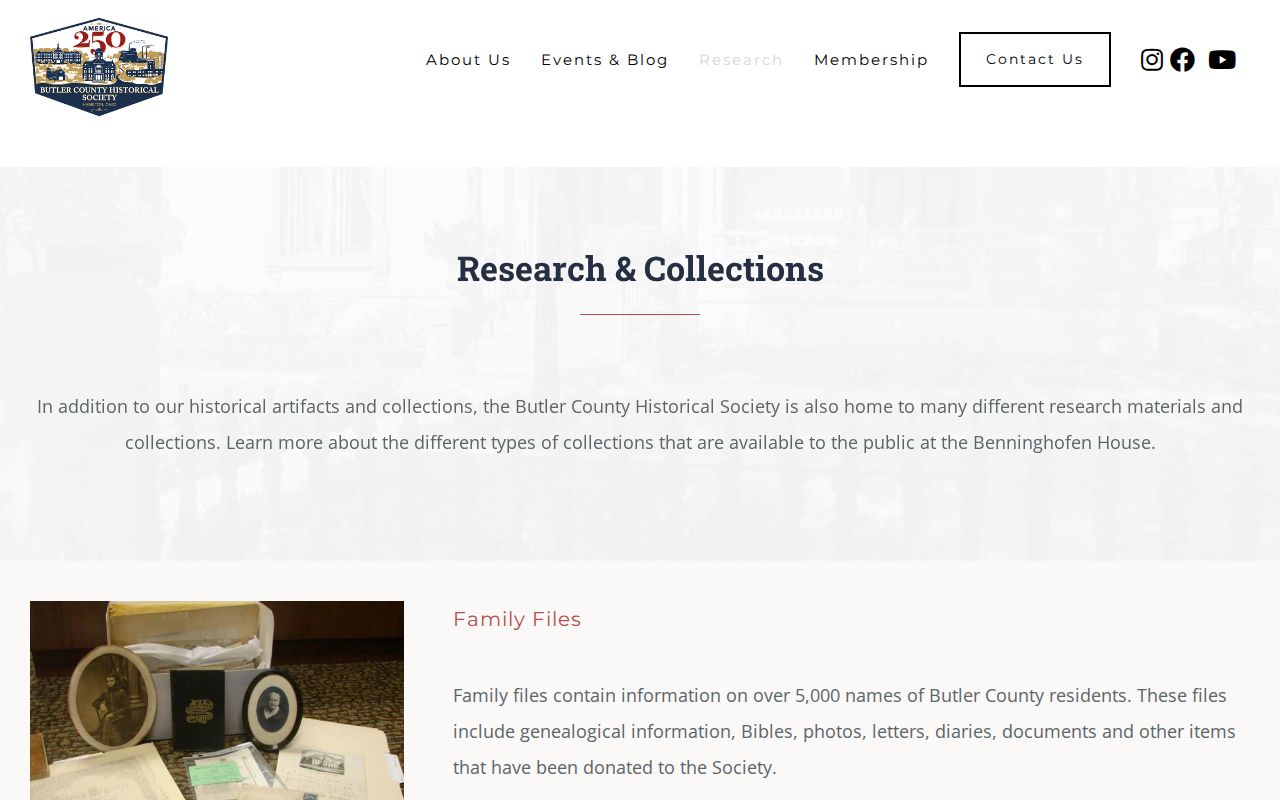
The published directory detail is strongest for Hamilton and Middletown, with an incomplete 1858-2017 span, plus county and rural directories. Ask specifically for an Oxford family file, county or rural directory, Oxford Press issue, College Corner News issue, map, church, school, or club holding. No research fee was verified on the collection page, so obtain current terms from the society.
Oxford Directory Miami Sources
Miami University Special Collections and University Archives add Oxford-specific depth beyond a directory volume. The Oxford collection includes church minute books, financial and membership records, court records and histories, diaries, address books, and early institutional material. Its local-history material is identified as 1830-2009. Named examples include Waldo F. Brown diaries and address books from 1853-1917, Oxford Female Institute catalogues for 1856-1857, and more than 4,000 early-twentieth-century Oxford negatives in the Frank R. Snyder collection.
The Miami Oxford collections portal is a useful source for that historical context.
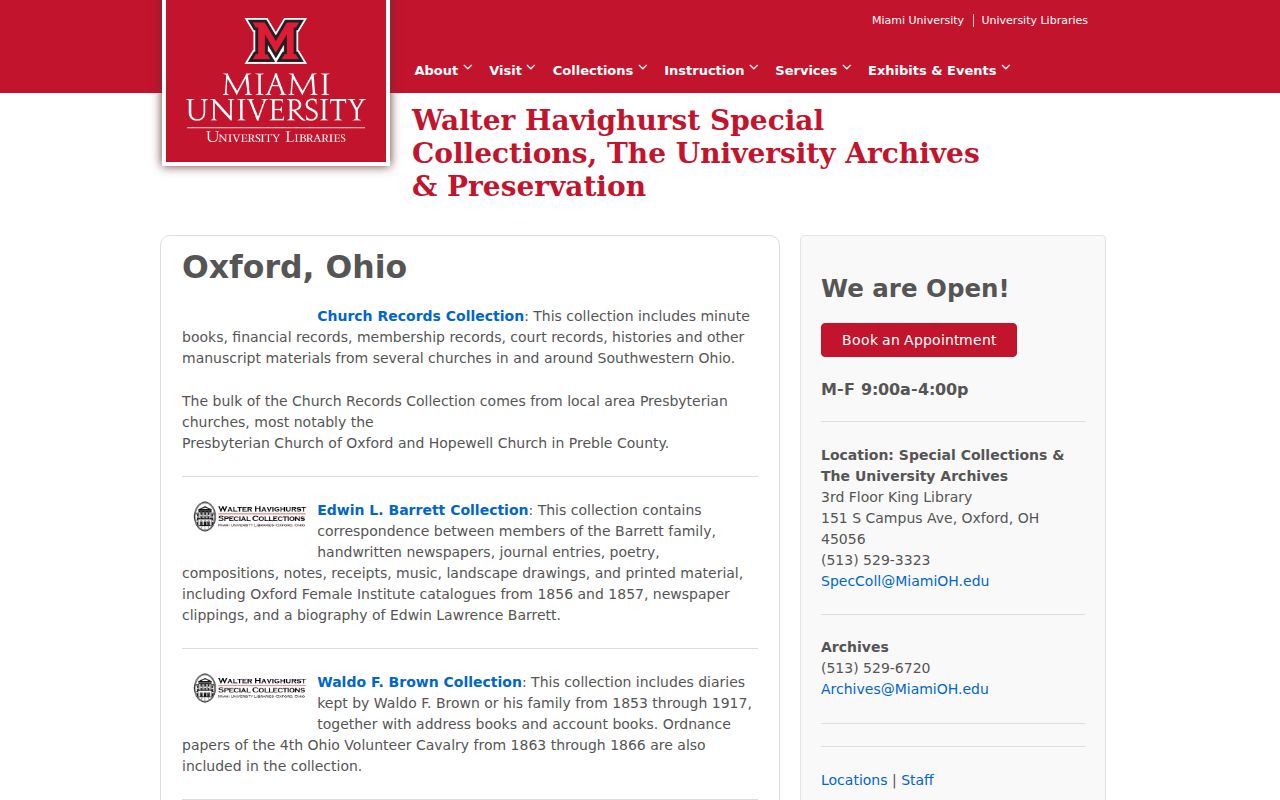
Use Archives@MiamiOH.edu or 513-529-6720 to arrange research or an appointment after locating a likely collection in ArchivesSpace. Miami yearbooks, student newspapers, and annuals can document university affiliation, activity, or hometown as stated by the source. Keep that distinct from an Oxford residential conclusion unless another record supports it.
Oxford Directory Endpoints
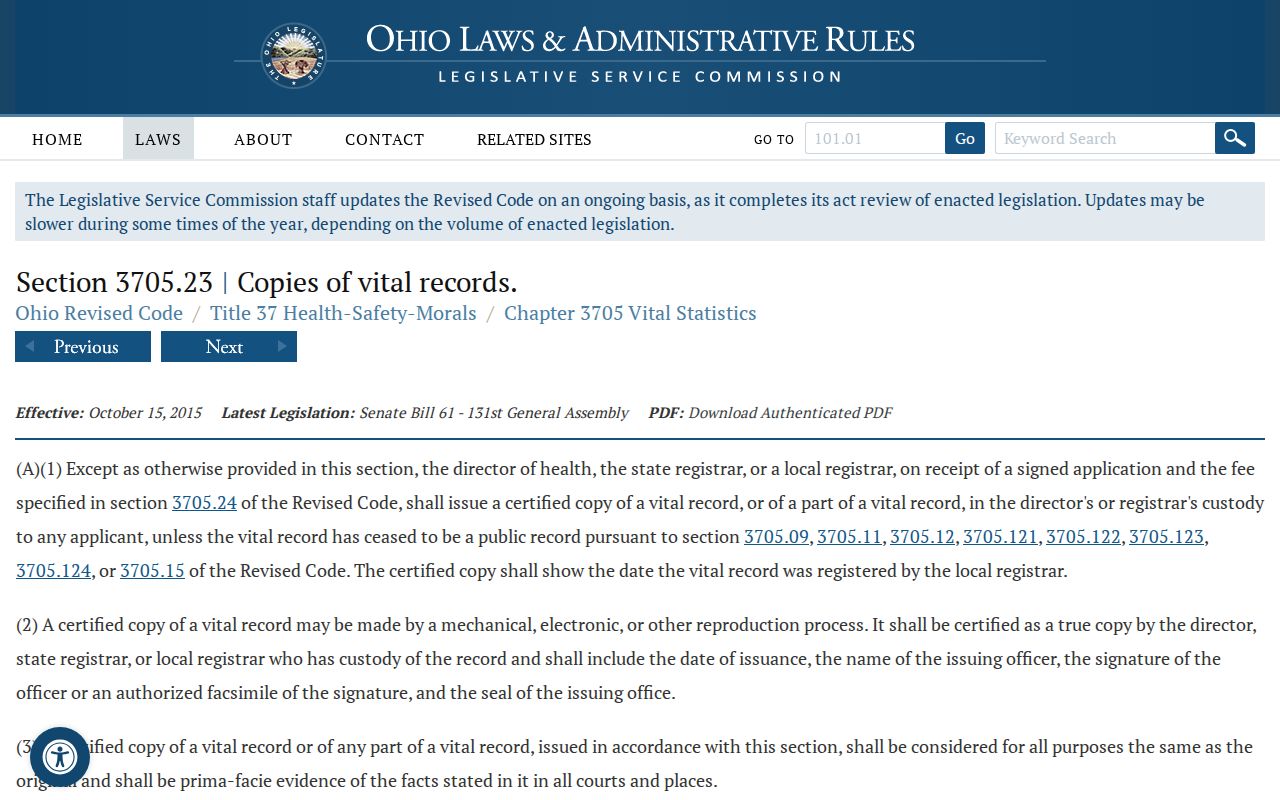
When a name disappears from a historical directory, the next record depends on the time and question. Probate files can support estate or heir research. Cemetery and obituary material may corroborate a death or local connection. Vital records require the statutory application route, not a directory assumption. Under Ohio Revised Code 3705.23, the state or local registrar generally issues a certified copy on signed application and fee unless a confidentiality provision applies; ordinary certified-copy access does not follow a simple fixed-years-closed rule.
The Ohio vital-record statute page is the governing source for that access rule.
Butler Probate Court is a local route for estates, guardianships, adoptions, name changes, marriage licenses, and older county material. Court files, an obituary, and a cemetery result should be read as distinct evidence, particularly because Woodside Cemetery reports lost early plot deeds, a numbering change beginning in 1962, a new survey in 1981, and partial 1921-1947 support from funeral-director records.
Oxford Directory Access Limits
Oxford records can require a request even when the question is straightforward. The City Clerk is the municipal public-records entry point for central city records, while library and archive staff control collection access. Ohio’s Public Records Act allows a person to request public records without Ohio residency, and the City says its online form is optional. A narrow request should identify an address or name variant, date range, record series, and preferred format. Do not ask a custodian to infer a broad identity trail from an undirected request.
The Ohio Attorney General Public Records Act overview provides the statewide access framework.
For city-held material, the Oxford Clerk of Council request page describes the optional online form, in-person inspection, and actual-cost copy rule. Electronic delivery is free when feasible. The city aims to acknowledge or satisfy a request within five business days, while the legal timing standard remains prompt and reasonable based on the request’s scope, review, and redaction needs.
Use the library, archive, court, or city channel that holds the particular item. A directory lead, public request response, or digitized image must never be used to stalk, harass, threaten, or expose a protected address.
Oxford Directory Address Context
City-directory wording needs geographic context before it is matched to a present address. Oxford grew from the original Mile Square through annexations, subdivisions, and later corridors. A historical source may use Oxford Township, rural Butler County, or city wording for the same long land trail. “Uptown” is literal higher-elevation geography and can help select the right historic-district, map, newspaper, photograph, or Community Development file for older central blocks.
Postal information is not an archive key or a land description. The USPS ZIP Code Lookup is the direct address-level check for current mailing details.
Use a current mailing result only to orient a modern query. A directory’s printed street wording, the Recorder’s legal description, and a map or plat remain separate evidence types that must be matched by date and place.